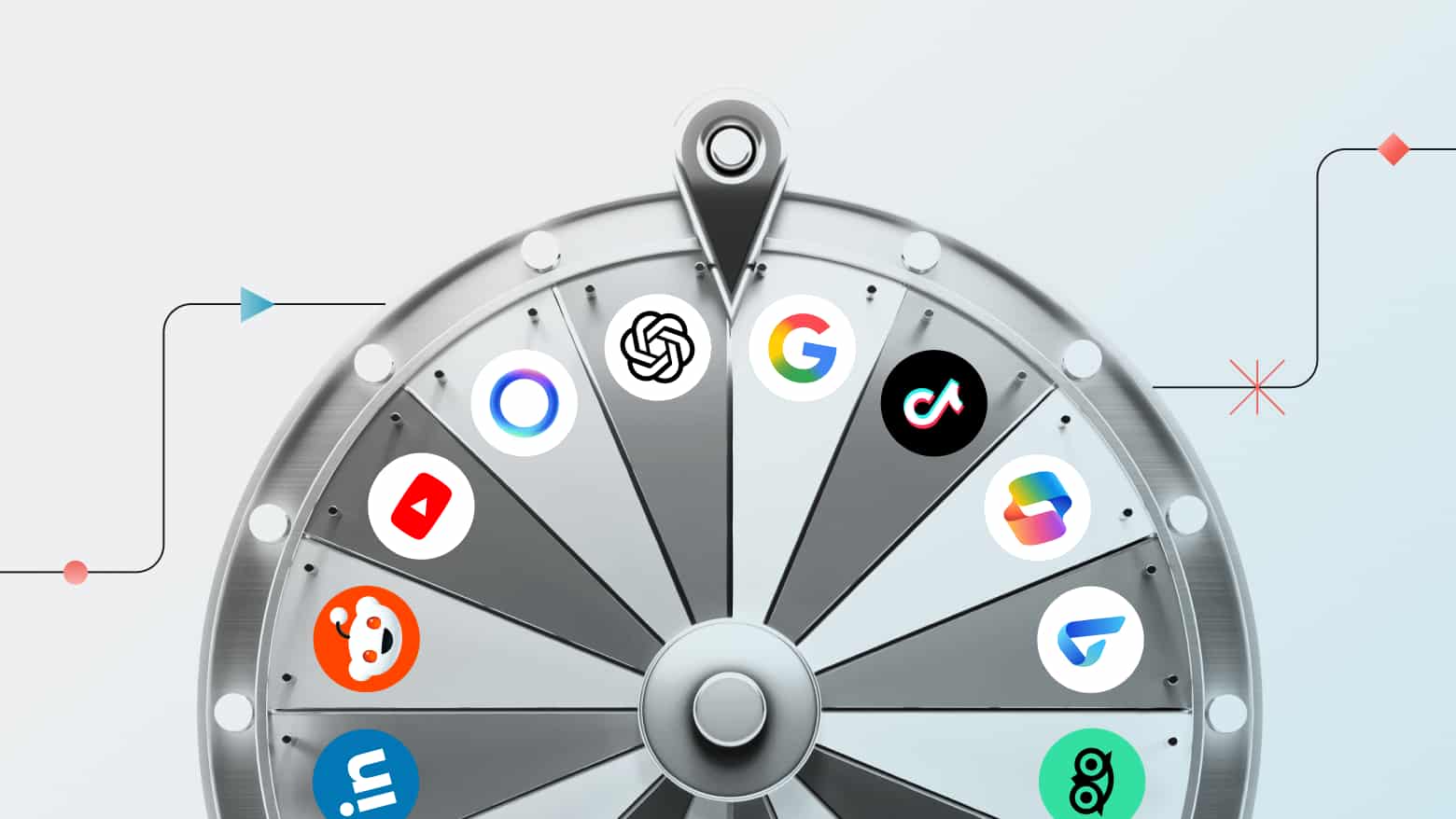
For years, digital marketers treated Google as the center of the internet. If you ranked well there, you could drive traffic, generate leads, and build a profitable content engine. That model still matters, but it is no longer enough. In 2026, search has become fragmented across many surfaces, and the smartest brands are adapting to a new reality: people do not only search on Google anymore.
They search on YouTube when they want to understand how something works. They search on TikTok and Instagram when they want quick discovery, inspiration, or peer-style recommendations. They search on Reddit and Quora when they want unfiltered opinions. They search on Amazon, Etsy, Temu, and other marketplaces when they are close to buying. They search on G2, Capterra, Trustpilot, and app stores when they want proof. And increasingly, they search inside AI tools when they want a direct answer instead of a list of links.
This shift is why Search Everywhere Optimization is rising so quickly. Semrush defines it as building visibility across every platform where your audience searches and researches, not just Google. That definition captures the core change well. Search is no longer a single channel. It is an ecosystem of discovery behaviors. If your brand appears only in traditional search results, you may still be visible, but you are no longer present across the full buying journey.
The reason this matters is tied to how people make decisions. Semrush explains that the higher the perceived commitment or risk of a purchase, the more platforms people use to reduce uncertainty before buying. Someone making a quick low-cost decision may search once and move on. But a buyer evaluating software, financial services, health products, premium electronics, or even a meaningful ecommerce purchase may research across many surfaces before converting. They want reassurance from different angles. They want social proof, demos, reviews, comparisons, and independent voices.
That means the old SEO question, “How do I rank on Google?” is too narrow. The more useful question in 2026 is, “Where does my audience go to validate a decision, and how can my brand be visible there?”. Search Everywhere Optimization starts from that audience-centered logic. It is not about publishing everywhere blindly. It is about matching your brand to the places where real curiosity, comparison, and trust-building happen.
This also helps explain why rankings alone are no longer enough. Search Engine Land argues that ranking number one still matters, but it no longer means what it once did because search has become multi-surface, messy, and increasingly influenced by AI, social, forums, and SERP features beyond classic blue links. A page can rank well and still lose attention if users get answers from AI Overviews, video results, forum threads, or creator content first. Visibility is now multidimensional.
One practical consequence is that brands need to move from keyword-centric planning to intent-centric planning. Semrush recommends building “intent pillars” rather than stopping at isolated keywords. In plain language, this means asking what the person behind the query is actually trying to solve and where that conversation is happening. For example, a search around CRM software may lead one person to Google for comparison articles, another to YouTube for demos, another to Reddit for honest feedback, and another to ChatGPT for a shortlist. The topic is the same, but the search behavior is distributed.
That is why platform selection should come after audience research, not before it. Semrush stresses that brands should start by learning how recent customers discovered, evaluated, and researched before purchasing. This is one of the most useful ideas in Search Everywhere Optimization because it prevents wasted effort. Instead of chasing every emerging platform, marketers can build a platform map based on actual buyer behavior. If your customers validate decisions on YouTube and Reddit, those matter more than forcing content onto a platform they barely use.
A second major shift is how we think about content itself. In the Google-only era, content was often designed to win a ranking. In the Search Everywhere era, content must travel across formats and environments. A strong topic may need a long-form article for your website, a short explainer video for YouTube Shorts or TikTok, a comparison thread for LinkedIn or Reddit, a visual asset for Pinterest, and structured product or review data for marketplaces and platforms. This does not mean repeating the same message identically everywhere. It means translating the same intent into native forms.
That content flexibility creates a flywheel effect. Semrush notes that search-optimized social content can continue to surface in platform search long after the first burst of engagement fades. In other words, social content is not only for virality. It can also become discoverable search inventory. The comments on that content can reveal objections and questions that improve your product pages. Your best-performing educational content can become ad creative. Repeated visibility across platforms builds familiarity, and that familiarity increases the chance of branded search later.
Branded search is one of the most important metrics in this new model. Semrush argues that branded search volume is one of the clearest signals that Search Everywhere Optimization is working because it shows that people are actively seeking your brand after encountering it elsewhere. This matters because many cross-platform journeys are hard to attribute perfectly. Someone may see your TikTok, then watch a YouTube review, then search your brand name on Google, then convert days later. Traditional attribution often misses that chain. Branded search helps reveal the underlying lift in preference.
Traffic diversification is another critical goal. Search Engine Land warns that if 80% to 90% of your discovery traffic comes from Google, you are likely too dependent on a single source. That dependence creates obvious risk, especially as AI answers, zero-click results, and alternative search habits continue to grow. Diversifying traffic does not mean reducing Google on purpose. It means building additional sources of qualified discovery from YouTube, social search, AI referrals, review platforms, community sites, and marketplaces. The result is a more resilient demand system.
The exact mix depends on the business model. For ecommerce, Search Engine Land recommends stronger focus on marketplace SEO, social platforms like TikTok, and video optimization because shoppers often compare reviews, shipping, images, and creator content before they buy. For B2B, the platform map is different. Buyers may use YouTube for product education, G2 and Capterra for comparison, Reddit or niche forums for peer opinions, and AI tools to condense research. The principle stays the same: optimize for the places where trust is formed.
Brand reputation becomes more important in this environment as well. Search Engine Land notes that when people research a brand, they are influenced not only by what the brand says on its own website, but by reviews, third-party validation, branded search results, ratings, and the general story that appears wherever they look. This means Search Everywhere Optimization overlaps with digital PR, creator strategy, review generation, and customer experience. Your website is increasingly a validation layer, not always the first discovery point.
Another important part of the strategy is identifying emerging conversations early. Semrush explains that traditional SEO often waits until search volume is obvious, but Search Everywhere works better when brands spot growing topics before the market becomes crowded. By publishing across platforms while a topic is still forming, a brand can establish authority before others react. This is especially relevant in AI search, where systems may reference brands that have already built distributed visibility across the web.
This early-mover advantage matters because AI systems do not only rely on one page or one search ranking. They absorb patterns from many public sources, including websites, video, reviews, discussions, and third-party mentions. A brand that shows up consistently across multiple environments becomes easier for AI systems and users to recognize as credible. That means Search Everywhere Optimization is not only a traffic strategy. It is also an authority strategy.
Of course, none of this works without measurement. Search Engine Land recommends tracking visitor quality, conversion rate, revenue per session, SERP diversification, non-Google referrals, brand reputation signals, and overall search contribution to growth. These are more useful than pure ranking reports because they reflect how search actually works now. If your Google sessions flatten but branded search rises, YouTube referrals grow, AI traffic appears, and conversion quality improves, that may be a win even if classic rankings tell a narrower story.
This requires a change in how teams are organized. Search Everywhere Optimization often fails when SEO, social, paid media, creators, PR, and content all work in separate silos. Search Engine Land and Semrush both suggest a more connected model where search becomes a cross-channel growth function rather than just a ranking discipline. In practice, that means shared themes, coordinated content planning, unified reporting, and better feedback between channels.
It also changes the role of creators. Semrush argues that in-house teams alone often cannot produce enough native, credible content across all relevant platforms, which is why creator partnerships matter. This is not only about influencer marketing. It is about platform fluency and trust. People often respond more strongly to real people than to polished brand accounts, especially on social and video platforms. When creators and brands align around real intent, content becomes more discoverable and more believable.
In the end, Search Everywhere Optimization is not the death of SEO. It is the expansion of SEO into the full discovery ecosystem. Google still matters. But it is now one line item in a broader visibility strategy rather than the whole strategy itself. Brands that keep treating search as a Google-only game may still generate traffic, but they will miss growing parts of how people actually decide.
Winning traffic beyond Google in 2026 requires a bigger mindset. Start with your audience. Map where they research. Build content around intent, not just keywords. Translate that intent across websites, video, social, communities, AI surfaces, and review platforms. Track branded search, referrals, conversions, and reputation, not just rank positions. The brands that do this well will not simply rank better. They will become easier to discover, easier to trust, and harder to ignore wherever search happens.