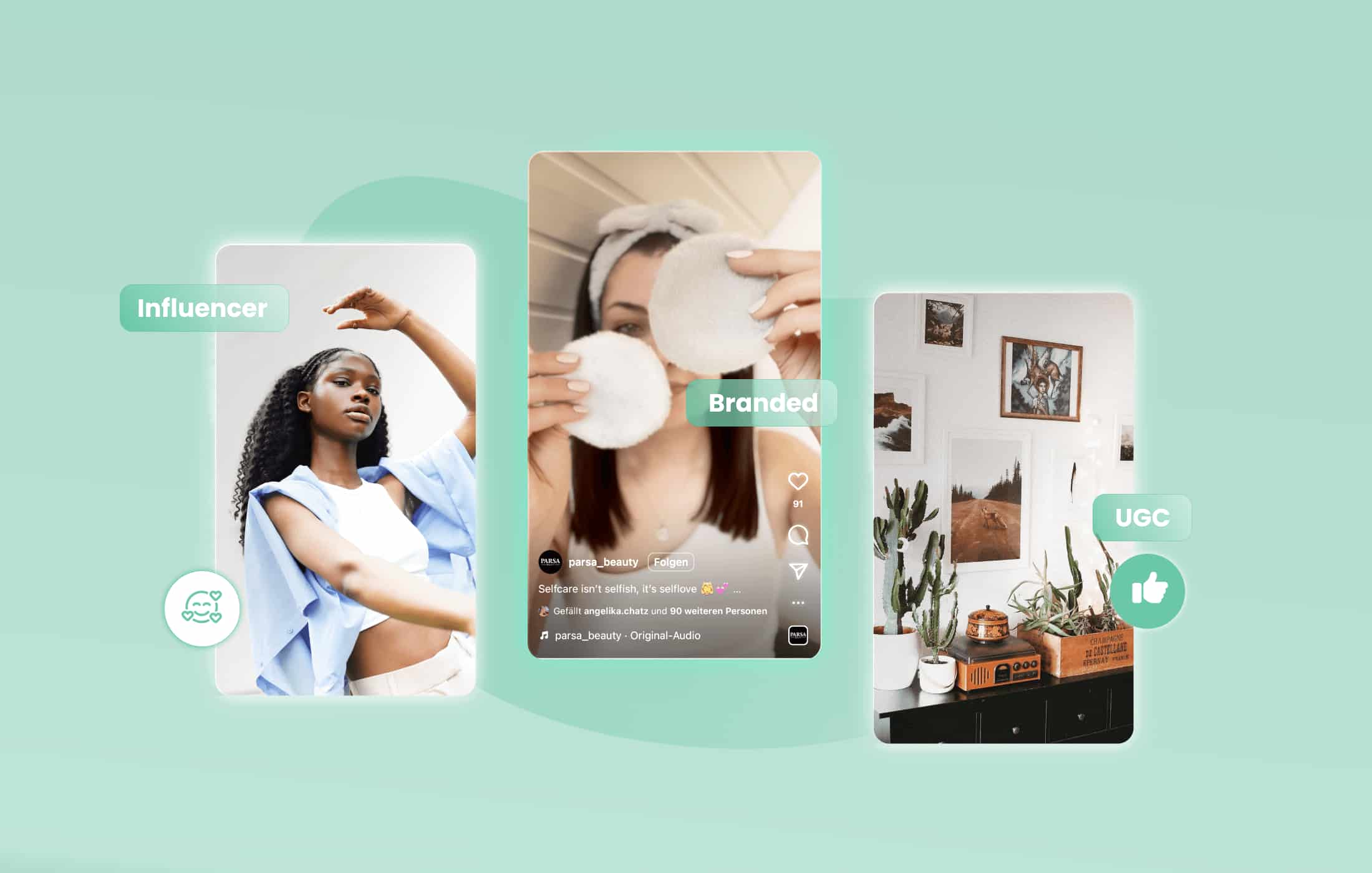
User-generated content (UGC) generally converts better than traditional branded content in 2026, mainly because audiences trust real customers more than polished ads and respond strongly to authenticity. That does not mean branded content is obsolete; the highest-performing brands now combine both, using UGC to drive conversion and branded content to build positioning and consistency.
Defining UGC and Branded Content
UGC is any content created by customers or real users about a product or brand, including reviews, photos, videos, testimonials, and social posts. It is often unpaid, unscripted, and shared on platforms like TikTok, Instagram, YouTube, or brand websites.
Branded content is planned, produced, and distributed by the brand or its agencies, designed to communicate key messages, aesthetics, and value propositions. It includes ad campaigns, product videos, landing page copy, and social posts created under brand control.
Conversion Performance: Who Wins Today?
Across current data, UGC outperforms branded content on key conversion metrics in 2026.
- Social posts featuring UGC can drive over 10x higher conversion rates than brand-created posts in some studies.
- Product pages and websites that include UGC (reviews, real-life photos, galleries) report conversion lifts from roughly 29% up to more than 70% versus pages without it.
- Shoppers who engage with UGC such as reviews and customer photos convert at well over double the rate of those who do not, reflecting how “proof of life” reduces purchase friction.
Branded content still converts, but typically at lower rates when used alone, especially in performance channels where social proof is expected. Its strength lies more in awareness and controlled storytelling than in last‑mile conversion.
Why UGC Converts Better in 2026
Several behavioral and platform-level factors explain why UGC leads in conversion effectiveness.
- Trust and authenticity: A large majority of consumers say they trust UGC more than traditional ads or polished brand visuals because it reflects real experiences rather than marketing claims.
- Social proof and risk reduction: Seeing real people use a product—especially in video—gives buyers confidence that the product is real, works as described, and fits their lifestyle, which is critical near checkout.
- Algorithm preference: Major platforms tend to reward “native,” real-feeling content with higher organic reach, which means UGC often outperforms heavily produced brand assets in engagement and visibility.
This combination of trust, proof, and reach means UGC often drives more clicks, more add‑to‑carts, and more completed purchases than comparable branded content.
Where Branded Content Still Excels
Despite UGC’s edge in conversion, branded content remains essential for several reasons.
- Consistent positioning: Brands need controlled messaging to communicate value propositions, pricing, compliance, and complex product features that UGC will not reliably cover.
- Top‑funnel awareness: Professionally produced campaigns are still powerful for reach, storytelling, and memorable brand identity, especially in new markets or product launches.
- Regulated or technical categories: In industries like finance, health, or B2B software, branded content provides necessary clarity, legal compliance, and structured information.
Used alone in performance channels, branded content may underperform UGC, but as a foundation for brand equity, it is hard to replace.
Best Use: Blending UGC and Branded Content
The strongest conversion results today usually come from hybrid strategies that use each type of content where it is strongest.
- On landing pages and product pages, brands combine clear brand copy with UGC galleries, star ratings, and real-life videos to lift conversions and time on site.
- In ads and email, inserting UGC snippets—screenshots of reviews, customer photos, or short user videos—has been shown to significantly increase click-through rates and reduce acquisition costs.
- Across social feeds, brands seed hero brand content to shape narrative but rely on creator and customer posts to drive engagement and direct response.
In 2026, the answer to “UGC vs branded content” is not either/or. UGC generally converts better at the point of decision, while branded content builds the trust, recognition, and clarity that make UGC even more persuasive when customers finally see it.